Chapter III - Echoes of Inclusion: WFLA BonVista Accessibility Club Chronicle
While we grow together, we are still learning to truly listen. The echoes of inclusion resonate through time and across barriers, surrounding us like air, long present yet too often unnoticed. As Audre Lorde once said, “It is not difference which immobilizes us, but silence.” In response to these echoes, we follow their rhythm. Every video we create, every story we share carries the quiet strength of voices too often unheard, shaping a future where inclusion is not just an idea...
February 21, 2025, Friday
BonVista Accessibility Club
BonVista Accessibility Club held a meeting to discuss upcoming activities that align with our mission to promote inclusion and accessibility. One of the major proposals on the table was the planning of a “big event,” when several exciting ideas emerged.
One suggestion was to host a carnival in a local community space, not only to foster connection and awareness but also to raise funds dedicated to making home environments more accessible for elderly residents. This initiative aims to provide practical support through thoughtful refurbishments, enabling seniors to live with greater comfort and independence.
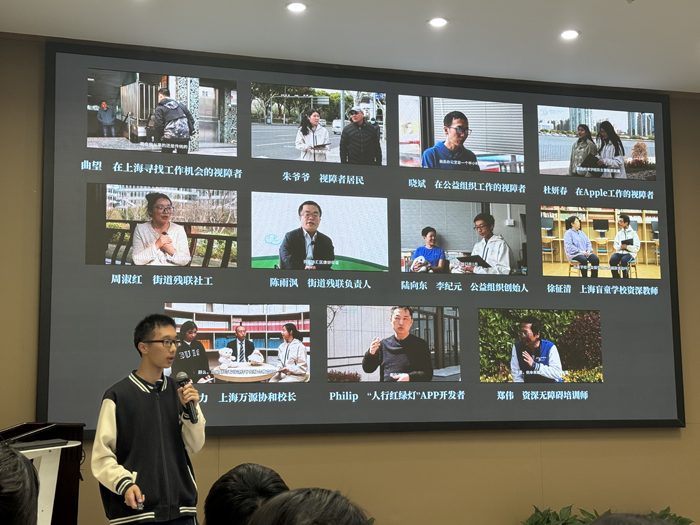
Another key discussion centered around creating a documentary or a series of short videos. These would explore the concept of accessibility by capturing the voices and experiences of people with visual impairments, as well as those around them. By highlighting diverse perspectives and authentic stories, we hope to foster empathy and break common stereotypes.
We also brainstormed plans for an “Accessibility Week” at school. This would be a multi-day program filled with interactive events, workshops, and awareness campaigns designed to engage students and teachers alike in understanding the importance of inclusion.
February 21, 2025, Friday
BonVista Accessibility Club
BonVista Accessibility Club visited 25 local residential community to put up accessibility posters in prominent locations.
Siqi Pan designed the first accessibility poster and then got it approved by the community government. The poster contained three key elements:
- An introduction to our club and the concept of accessibility
- A comic strip demonstrating the proper way to guide visually impaired individuals
- And a graphic section showcasing the accessible facilities available in our community.
To add a friendly touch, Siqi created a mascot named Bonny, who is a cheerful bunny dressed in our club uniform.
February 22, 2025, Saturday
BonVista Accessibility Club; Seniors from Kangjian Community; Ms. Zhou from Kangjian Community
BonVista Accessibility warmly participated in the “Youth Accompanying the Sunset” event organized by Kangjian Street. This meaningful gathering created a bridge of connection between the elderly grandmothers in the community and the Club members. The grandmothers crafted beautiful handmade gifts, including adorable hair ties, cozy yarn earphone covers, and handy card holders, with careful workmanship and heartfelt affection. During the event, club members shared heartfelt conversations with the grandmothers, exchanging stories from daily life, filling the atmosphere with laughter and warmth. In gratitude for the sincere companionship, the grandmothers expressed their appreciation and best wishes to the younger generation. One of the grandmothers said emotionally that the Club member visited her almost every week, much more frequently than her own son. This touching event not only deepened the bonds within the community but also highlighted our club’s commitment to spreading love and inclusion. The Club sincerely thanked the Kangjian Street Disabled Persons’ Federation for their dedicated organization and support, and was deeply grateful to every grandmother for their generous kindness.
March 7, 2025, Friday
BonVista Accessibility Club
BonVista Accessibility Club held its planning meeting to prepare for their largest events of the semester in school: Accessibility Week. The meeting focused on finalizing the structure and details of the initiative, which aims to educate students and teachers about accessibility and to raise awareness around the experiences of individuals with disabilities.
The core objective of Accessibility Week is to promote understanding, empathy, and inclusiveness within the school community. To support this, the club plans to distribute informational booklets and flyers that explain basic accessibility concepts and highlight accessible practices in daily life.
A series of themed activities were discussed and proposed. These include a “Dark Café” or sensory experience room where participants would navigate and perform simple tasks in low-light or blindfolded conditions to better understand the challenges faced by visually impaired individuals. A debate showcase would be organized in collaboration with the school’s debate team, presenting arguments and perspectives on accessibility-related topics in a structured format. The Neuroscience Club would co-host a lecture focused on sensory processing in the brain, followed by interactive games such as “Find the Blind Spot” to make neuroscience concepts engaging and relevant.
Other planned activities include a blind football experience, where students would be guided through the rules and play a modified version of the game using sound-based cues, and a tactile and auditory exploration booth designed to help participants better appreciate non-visual perception. The Audiobook Club would join in hosting an accessible film screening that includes audio descriptions, allowing participants to experience inclusive media design. A clay modeling workshop would encourage students to create sculptures using only their sense of touch, emphasizing the role of alternative sensory input in creative expression.
The club also discussed a visit to the Shanghai Blind Child School, aiming to deepen student understanding through real-world interaction and further build the bridge between the club and the visually impaired community.
March 8, 2025, Saturday
Siqi Pan
Siqi Pan designed the second, third, and fourth editions of the accessibility poster series. These posters explored key concepts of housing accessibility, including features such as floor accessibility, handrail accessibility, and walkway accessibility. Each section was carefully illustrated to help viewers understand how thoughtful design can make everyday spaces more inclusive and navigable for everyone. In addition, the posters introduced a variety of facts about braille, from its author and reading method to its practical applications in daily life, aiming to promote awareness and appreciation for this essential communication system used by people with visual impairments. Through clear explanations and engaging visuals, the posters serve as both educational tools and advocacy materials, encouraging the public to see accessibility as a shared responsibility.
Additional Reading: Housing Accessibility
March 16, 2025, Sunday
BonVista Accessibility Club; Qu, Wang
BonVista Accessibility Club carried out the first full-day shooting session for their new accessibility awareness video series.
In the days leading up to the shoot, Siqi Pan had engaged in in-depth conversations with Qu Wang, carefully discussing the details of the interview and filming process. Through these thoughtful exchanges, they developed a shared understanding of the goals and structure of the project. Qu expressed was very glad about being interviewed by the Club, seeing it as a meaningful opportunity to share his story and contribute to the promotion of accessibility awareness.
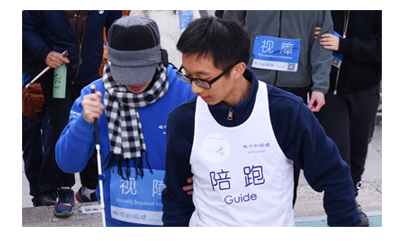
The team, consisting of four Club members and one visually impaired interviewee, Qu Wang, arrived at Century Park to join beYoureyeS weekend inclusive event at 2:00 PM. After the event at about 4:00 PM, the team took the metro to Qu’s home to capture footage intended to record his daily life.
While the original script included plans to film inside the metro system to document Qu’s independent commuting experience, the request was declined by station staff. As a result, filming inside the subway was cancelled, but the group continued their journey, switching from Line 2 to Line 11. Despite it being a weekend, the trains remained crowded. Qu stayed with us and talked with us time to time about everyday commuting.
Upon exiting the metro, the team resumed filming in public outdoor areas. With a straight road ahead and no pedestrians in sight, Qu demonstrated his confident walking pace using a white cane, while a student cameraman captured the movement in a continuous tracking shot. After a short break at a local shopping mall, the group decided to travel one stop back to visit a restaurant frequently visited by Qu.
The owner of the small eatery welcomed the team and permitted filming inside. Over bowls of steaming rice noodles filled with ingredients like fish balls, sausages, shrimp dumplings, and quail eggs, the group took the opportunity to rest and reflect. It was during this moment that the idea was proposed to create two content series for the club’s ongoing outreach: one focused on activity updates, and another dedicated to behind-the-scenes stories from each shoot.
After dinner, the group continued their walk to Qu’s home, guided by Qu himself through an unlit residential path. He noted that he walks this route daily for work, and his familiarity with it allowed him to lead the group confidently.
Filming resumed inside the modest apartment, Qu sat at the edge of his bed and gave an interview to the Club, during which he shared his personal journey, his impressions of living in Shanghai, and his aspirations for the future. He spoke about his experiences navigating the city as a visually impaired individual and his evolving plans for a career in technology.
After the interview, Qu gave the club members a glimpse into his daily life by demonstrating how he studies programming using screen readers and keyboard shortcuts, showing both his determination and adaptability. He then proceeded to show how he tidies his room and handles household chores independently, from sweeping the floor to organizing his belongings.
Throughout the session, Qu emphasized one key message: that visually impaired individuals are fundamentally no different from others. The only difference, he noted, is that they might occasionally require a bit of assistance, which is not out of weakness, but to ensure equal participation and opportunity. His words offered a powerful reminder of the importance of respect, dignity, and understanding in building an inclusive society.
This session marked the first major filming effort in the club’s accessibility video initiative, aiming to provide authentic and personal insights into the lives of visually impaired individuals and to promote awareness and empathy through visual storytelling.
Additional Reading: Scene 1: Documentary Interview with Wang Qu, a person with visual impairment
March 22, 2025, Saturday
BonVista Accessibility Club; Philip
BonVista Accessibility Club interviewed with Philip, an engineer and AI architect who has developed two accessibility applications: Pedestrian Light and 3D White Cane. Both tools are designed to support visually impaired individuals in their daily mobility.
Pedestrian Light uses artificial intelligence to detect pedestrian traffic lights and provides real-time audio prompts to indicate whether it is safe to cross. The 3D White Cane utilizes a smartphone’s LiDAR sensor to detect nearby obstacles and communicates distance information to the user through audio cues, enhancing their spatial awareness.
Philip, who has worked at a global technology company for nearly 18 years, shared insights into the development process. He began conceptualizing public-interest AI tools five to six years ago, with development on Pedestrian Light officially starting in November of the previous year. Over a three-month development cycle, Philip committed almost all his time to the project, often working until 10:30 PM with only a single day of rest.
He emphasized that the technology his team has implemented is one of only two such systems in the world. Still, he holds high expectations for its performance. “Our accuracy must reach seven nines,” he said, referring to 99.99999% precision. Achieving this level, he believes, would surpass even the most advanced global companies. Currently, Philip’s model is trained on a database of over 100,000 traffic light images taken from various angles and locations, achieving over 99% accuracy, already well above the industry-standard threshold of 98%. Yet, he remains committed to continuous improvement, citing both safety and long-term cost-effectiveness as reasons to push for higher standards.
Looking ahead, Philip envisions that AI technologies would eventually surpass guide dogs in mobility assistance. While guide dogs currently have superior obstacle avoidance, they are limited by lower cognitive processing. He believes AI’s high reasoning ability, combined with future improvements in sensory navigation, would ultimately bridge this gap.
The interview took place in a city park, surrounded by weekend visitors, children playing, and families enjoying the afternoon. While the park's background noise made recording a challenge at times, it also reflected the real-life environment in which accessibility technologies must function. After the interview, Philip gave a live demonstration of both apps, showcasing their practical use and interface.
Additional Reading: Scene 2: Documentary Interview with the developer of the App Pedestrian Light
March 23, 2025, Sunday
BonVista Accessibility Club; Chen, Xiaobin
BonVista Accessibility Club interviewed Chen Xiaobin. Club members attended the beYoureyeS inclusive weekend event at 2:00 PM in Gumei Park, after which they met with Xiaobin in a nearby room for the interview.
Before the interview began, Xiaobin demonstrated his adept use of assistive technology, operating his smartphone smoothly with a screen reader and navigating apps independently. He was able to locate and present a specific video from Douyin, quickly enabling screen display when needed.
During the formal interview, Xiaobin responded fluently and confidently to each question. He shared his experience of losing vision later in life due to illness, and how he adapted by enrolling in university through China’s accessible college entrance system. He also spoke about his involvement with the nonprofit organization Lanjingling where he transitioned from a participant to an organizer.
Xiaobin emphasized a key idea throughout the interview: that visually impaired individuals are not fundamentally different from others and only require occasional support. He further elaborated on his view of equality, stating that it should not be seen as one side helping another, but as a collaborative effort to create a more accessible society for everyone.
Additional Reading: Scene 3: Documentary Interview with Xiaobin, A Person with Visual Impairment
March 23, 2025, Sunday
BonVista Accessibility Club; Zhou, Shuhong
BonVista Accessibility Club interviewed Ms. Zhou Shuhong, a community-based social worker affiliated with the China Disabled Persons’ Federation (CDPF). With more than two years of field experience, Ms. Zhou provided an insightful overview of her responsibilities, the challenges she faces, and the deeper meaning she finds in her work supporting people with disabilities.
Ms. Zhou’s work primarily involves policy implementation, welfare support, and community engagement. She assists individuals with disabilities in applying for assistive devices and securing financial reimbursements for rehabilitation or medical expenses.
Much of her work focuses on supporting elderly individuals with disabilities, many of whom experience isolation and emotional vulnerability. She described how even brief, respectful conversations can offer comfort and connection, particularly to those who lack companionship. These moments, she noted, have shown her the profound impact of warmth and sincerity in human interaction.
In her role, Ms. Zhou has also encountered many stories of perseverance and personal achievement. She highlighted a hearing-impaired scholar who earned a doctoral degree and now teaches at Shanghai Normal University, and a boy with autism who gradually gained the confidence to perform on stage. These examples, she said, have been sources of deep inspiration and reminders of the strength found in adversity.
At the same time, she acknowledged that some individuals remain emotionally closed off, despite repeated outreach efforts. She recalled visiting a household with an elderly couple and their adult son with mental disabilities, who consistently declined invitations to community activities. Such experiences, she admitted, can leave social workers feeling helpless when emotional barriers remain unmoved.
Ms. Zhou described accessibility as encompassing three key aspects: the physical environment, such as ramps and elevators; information accessibility, including braille and screen readers; and humanistic accessibility, which emphasizes empathy, respect, and treating people with disabilities as equals. She views disability as simply a different way of experiencing life, one that holds its own value and meaning.
Additional Reading: Scene 4: Documentary Interview with a Social Worker in Community in CDPF
March 29, 2025, Saturday
BonVista Accessibility Club; Chen, Yufeng
BonVista Accessibility Club interviewed Mr. Chen Yufeng, Director of the Disabled Persons’ Federation at Kangjian Subdistrict, to explore how local disability services are delivered and how accessibility is being promoted in the community.
With 16 years of experience and lived perspective as a person with a disability, Mr. Chen shared insights into the Federation’s role in implementing national and local policies, providing subsidies, promoting employment and education, and supporting rehabilitation and cultural participation.
He explained that services are tailored according to disability classification, with subsidies for care, transportation, and hardship. In Xuhui District, additional care insurance plans are provided, covering hospitalization and outpatient needs. Mr. Chen emphasized the transformative role of technology, including audiobook players for the blind, smart glasses for the hearing impaired, and GPS wristbands for those with intellectual disabilities. These tools, he noted, are helping disabled persons live more safely and independently.
Mr. Chen also addressed public feedback systems and participation channels, such as the 12345 hotline and online government platforms, which now include features like sign language support. He pointed out that more persons with disabilities are becoming politically engaged and are increasingly advocating for themselves.
Employment remains a key priority. The Federation offers skills training aligned with market trends and cooperates with companies to help trainees find jobs. Employers who hire people with disabilities receive tax benefits. Mr. Chen also described how the Federation organizes both self-run and inclusive events to promote understanding and build community.
He encouraged persons with disabilities to reach out to social organizations and make use of available support systems. For students and young people interested in accessibility and community service, he advised beginning with local action, learning from established groups, and developing their own service styles through experience.
Additional Reading: Scene 5: Documentary Interview with the Head of the Subdistrict Disabled Persons' Federation
March 30, 2025, Sunday
BonVista Accessibility Club; Grandpa Zhu, a Resident in Kangjian Community
BonVista Accessibility Club interviewed Grandpa Zhu, a senior resident of the Kangjian Subdistrict who lives with level-two visual impairment. The conversation began with a walk along Cherry Blossom Avenue, where club members chatted with him as he carefully navigated the familiar path, sharing insights about his daily routines. Later, they settled in a nearby pavilion to continue the interview more comfortably.
Grandpa Zhu explained that although his vision is significantly impaired, he can still see in a blurry way but cannot clearly recognize faces or distinguish specific items, such as different dishes during meals. He recounted how he often recognizes people by their voices rather than their appearances and relies heavily on familiar landmarks to move safely. He walks daily along memorized routes like Cherry Blossom Avenue, carefully navigating bumps and slopes while staying alert to avoid obstacles. Despite occasional mishaps like bumping into people or misstepping, he insists on maintaining his independence and staying active to “create his own happiness.”
Before retiring, he worked at the East China Office of the Ministry of Light Industry, overseeing regional production. Now, he prefers to keep his use of technology simple, focusing on answering phone calls, checking WeChat messages, and making mobile payments. Although he has obtained a white cane for safety, he is hesitant to use it publicly because he does not want to appear overly dependent or attract unwanted attention. This reflects the complex balance he feels between ensuring safety and preserving his personal dignity.
Grandpa Zhu also noted how his visual impairment affects more than just eyesight; it slows down his brain’s reactions and limits his awareness of the surroundings. He recalled when he used to ride a scooter around the city, a symbol of independence now curtailed by health and environmental changes.
At the end of the interview, Grandpa Zhu delighted the club members by singing songs in the pavilion. Through this walk, conversation, and music, he offered a vivid and inspiring glimpse into living with vision loss while maintaining joy and resilience.
Additional Reading: Scene 6: Documentary Interview with a Visually Impaired Community Resident
March 30, 2025, Sunday
BonVista Accessibility Club; Du, Yanchun
BonVista Accessibility Club conducted an interview with Du Yanchun, a visually impaired professional employed at a high-tech company in Shanghai. Meeting along Binjiang Avenue, Du shared her personal journey of moving to Shanghai in 2020 and the challenges she faced growing up with inclusive education. She spoke candidly about the struggles of navigating early educational environments and how finding inclusive employment has brought her both joy and a sense of achievement.
Du described herself as bold, independent, and curious, emphasizing that her visual impairment has never limited her adventurous spirit. She relies on tools such as a white cane, phone magnifiers, text recognition apps, and voice navigation to live and work confidently in the city. Despite occasional barriers, including a difficult housing experience when a landlord initially hesitated to rent to her, Du asserted her rights and gained acceptance. She praised Shanghai for its openness and accessibility while highlighting the importance of trust and respect for independence in accessible services.
During the interview, Du reflected on the fine line between helpfulness and condescension, noting that sometimes well-meaning people act out of fear or misunderstanding rather than actual danger. She also shared how her path into the tech industry diverged from the expected career tracks for visually impaired students, demonstrating resilience by pursuing skills in broadcasting, audio editing, and artificial intelligence.
Beyond her professional life, Du enjoys traveling, writing modern poetry, engaging in AI storytelling, performing in musicals, and playing social games. She believes in living freely and encourages others to do the same, viewing true accessibility as the freedom to pursue one’s passions and live authentically.
After the formal interview, club members continued walking and chatting with Du, witnessing her vibrant and independent spirit.
Additional Reading: Scene 7: Documentary Interview with Xiao Du, A Person with Visual Impairment
April 5, 2025, Saturday
BonVista Accessibility Club; Li, Jiyuan; Lu, Xiangdong
The BonVista Accessibility Club conducted an in-depth interview with Li Jiyuan and Lu Xiangdong, the founders of a nonprofit organization, Lanjingling. The nearly three-hour conversation was rich with insight and emotion, covering the history, achievements, challenges, and future vision of Lanjingling over the past decade.
Jiyuan and Xiangdong began by reflecting on their personal journey since the organization's first beYoureyeS event in January 2015, which marked the start of both their shared life and a growing mission of advocacy and empowerment. Over ten years, Lanjingling has carried out a wide range of activities including weekly regular events, sports competitions, corporate social responsibility initiatives, campus outreach, workplace empowerment programs, and the 100-Day Engagement etc.
Jiyuan and Xiangdong highlighted that among many meaningful efforts, the community-building activities and the workplace empowerment initiatives, especially 100-Day Engagement, stand out as particularly impactful.
They discussed the significant social changes over the past decade, noting that public understanding and acceptance of people with visual impairments have improved considerably. While skepticism and hesitation still exist, societal attitudes have shifted from misunderstanding and prejudice toward appreciation and inclusion. They attributed these changes to increased awareness, advocacy efforts, and the visibility of persons with disabilities actively participating in society.
Lanjingling’s guiding principles, equality, inclusion, diversity, and empowerment, were explained through concrete examples. They emphasized that promoting “accessibility” and respect to each other mean enabling equal participation in all aspects of life, from education to employment to cultural activities.
Jiyuan and Xiangdong shared moving impressions from their interactions with visually impaired children and their parents, emphasizing how Lanjingling’s accessible education courses in schools have positively influenced students’ attitudes. They also highlighted the importance of “visual impairment etiquette” training to foster smooth communication between disabled and sighted individuals.
They also reflected on their 2019 visit to the United States as part of the GSMP program. And they compared operating a nonprofit organization to running a company, discussing government support, funding challenges, and organizational sustainability.
...
There was too much information to be summarized. Read more: Scene 8: Documentary Interview with the Founders of a Nonprofit Organization
April 6, 2025, Sunday
BonVista Accessibility Club; Zhen, Wei
BonVista Accessibility Club interviewed Mr. Zhen Wei in Minhang Sports Park.
Within the Lanjingling community, Wei Zheng, affectionately known as “Captain,” stands out as a dedicated and experienced supporter of the beYoureyeS initiative since its inception nearly ten years ago. Over time, he has taken on many roles, including organizing weekend running events and training new volunteers. The nickname “Captain” arose informally during early weekday runs with a small group of visually impaired friends and volunteers, and it has remained ever since.
Wei Zheng is also a Baymax evaluator, responsible for training and assessing volunteers in guiding techniques. Initially, the focus was on safety, communication, and proper protocols. Wei helped improve the training system by adding incremental stages between “Little Baymax” and full “Baymax,” allowing volunteers more opportunities to learn and grow.
When guiding visually impaired runners, Wei emphasizes genuine human connection above all. He patiently demonstrates how to describe obstacles clearly, avoid vague directions, and offer enough space for the runner to understand their surroundings. Adjusting guiding techniques for different situations, such as narrow paths, low branches, or seating, is part of building trust without exerting control.
In running guidance, Wei introduces the use of a running tether, held gently by both guide and runner. This setup allows the guide to maintain connection and safety while allowing the runner independence in emergencies. The key to effective guidance is maintaining rhythm and synchronization rather than physical control.
Additional Reading: Scene 9: Documentary Interview with an Accessibility Facilitator
April 11, 2025, Friday
BonVista Accessibility Club
BonVista Accessibility Club gathered for an important meeting to finalize the plans for Accessibility Week in school. The Club outlined a two-day program filled with engaging and meaningful activities designed to educate participants and foster empathy.
The first day would feature a Dark Experience event where participants would wear blindfold and attempt to complete a series of five different tasks and games. This immersive activity aims to simulate the challenges faced by individuals with visual impairments, helping participants gain a deeper understanding of accessibility barriers. Those who successfully complete all five tasks would receive a small reward as encouragement and recognition of their efforts. Additionally, we would host a collaborative workshop with the Neuroscience Club that would delve into the science behind vision and common visual impairments, offering attendees valuable insights into how the human eye works and the impact of vision loss.
On the second day, an accessible film screening would allow attendees to enjoy cinema with audio description, ensuring everyone can fully participate. Alongside this, an accessible art event would showcase creative works designed to be enjoyed by people of all abilities, emphasizing the importance of universal design in the arts. Sports enthusiasts would be able to join accessible versions of Ping-Pong and football, promoting physical activity and teamwork in an inclusive environment. The day would also include a workshop focused on inclusive employment, addressing the barriers faced by people with disabilities in the workforce and exploring ways to create supportive, equitable job opportunities.
April 17, 2025, Thursday
BonVista Accessibility Club; Ms. Xu, Zhengqing from Shanghai Blind Child School
BonVista Accessibility Club interviewed a teacher from Shanghai Blind Child School. She shared thoughtful insights into the daily life, education, and support systems for students with visual impairments. The school currently enrolls across all age groups. Core subjects include Chinese, mathematics, English, and music, alongside courses in life skills and mobility training. Students tend to excel in music and language arts, while subjects involving complex visual information, like geometry or science diagrams, often present more challenges.
The school uses specially adapted teaching materials, some of which are developed in-house. When existing materials fall short, teachers collaborate to supplement or create new content. With the advancement of assistive technology, the school now offers training in screen readers, smartphones, and braille displays to help students build digital literacy. A typical day blends academic lessons with physical activities, life skill instruction, and independent living practice. Safety is a top priority, with campus-wide measures to ensure students’ well-being.
To nurture independence, students receive training in daily living skills, such as dressing, dining, and navigating their environment. The school also provides regular medical checkups and stays informed about new treatment methods. Physical education includes adapted sports like ball games and jotting. Various extracurricular events and collaborations with mainstream schools help promote inclusion. Some of the most meaningful activities include joint art exhibitions, talent shows, and inclusive sports meets.
For secondary education, students take adapted entrance exams. Those who do not continue to high school can choose from vocational pathways. A growing number of graduates now pursue higher education. While massage therapy remains a common career path, the school is committed to broadening students’ professional options through technology training and career exploration. Several visually impaired teachers work at the school, having entered the profession through specialized teacher training programs.
Counseling services support both students and their families, with a focus on emotional well-being and practical skills. Teachers often provide tailored guidance and organize group sessions. One example involved a student struggling with anxiety, who found confidence through music therapy and peer encouragement. Regarding inclusive education, the teacher recognized its value and believed that integrated schooling could become more common in China as awareness and support improve.
Government funding plays a crucial role in sustaining the school’s operations, and public donations are also welcome. For true integration, Ms. Xu believes the most important factors are respect, accessibility, and equal opportunity. Although special education can be demanding, especially emotionally, the teacher finds strength in small victories and the smiles of her students. She shared heartwarming moments. When asked about her wish, she simply said she hopes every child with a visual impairment can live a life of dignity, choice, and joy.
Additional Reading: Scene 10: Documentary Interview with a Teacher from Shanghai Blind Child School
May 8, 2025, Thursday
BonVista Accessibility Club; Other School Clubs
BonVista organized a two-day Accessibility Week event at school in collaboration with several other student clubs.
In the 2 days leading up to Accessibility Week, club members held practice sessions to familiarize themselves with the event activities. They learned how to guide participants, organize the games, and respond effectively to unexpected situations.
Lu Yichen designed the poster and flyer for Accessibility Week event and Siqi Pan produced the video that would play in the event.
On the first day, participants explored two themed activities.
In the Dark Experience Journey, they wore blindfolds to simulate visual impairment and took part in a series of hands-on challenges, such as transferring beads with chopsticks, building LEGO structures by touch, identifying characters or letters through tactile reading, drawing based on verbal instructions, and reading or writing simple braille in collaboration with the Literature and Language Club. Each completed challenge earned a stamp, and participants who finished all activities received a certificate and a small prize.
Alongside this, the Dark Exploration Journey was held in collaboration with the Neuroscience Club. Through games and interactive displays, participants learned about how the visual system works and explored the causes and types of visual impairments. Activities included assembling a model of the human eye, experiencing visual illusions, and simulating different kinds of vision loss.
The second day focused on the capabilities of people with visual impairments and the principles of accessibility.
The Dark Art Journey featured an accessible exhibition of Van Gogh’s Café Terrace at Night, where participants experienced the artwork through touch, sound, scent, and light cues.
The Dark Film Journey, co-organized with the Audiobook Club, offered students the opportunity to watch accessible films while blindfolded, relying only on audio narration. Afterward, they viewed the original version to reflect on the differences and similarities.
The Dark Sports Journey, organized with the Football and Ping-Pong Clubs, invited participants to try blind football and adapted table tennis. Blindfolded students practiced dribbling and shooting in guided football sessions, and more experienced players joined short matches with safety support. In blind table tennis, participants played one-on-one matches using adapted equipment and techniques.
The final activity, the Dark Employment Journey, introduced the concept of inclusive employment. In collaboration with the Business Club and the Engineering Division of the Physics Club, participants learned about assistive technologies and accessible product design that support people with disabilities in the workplace.
To support the event, a general event poster was displayed in prominent areas to direct participants to the various activity locations. The Accessibility Club also created posters to raise awareness about accessibility concepts, which were displayed on corridor windows and entrance boards. Short documentaries and videos about accessibility were played on a digital whiteboard in visible locations to further engage the school community and promote inclusive thinking.
May 12, 2025, Monday
BonVista Accessibility Club
BonVista Accessibility Club held an important meeting to elect its new leader for the upcoming year. Two candidates, Xia Yuheng and Liu Yunjia, each delivered a ten-minute speech in which they reflected on the club’s activities over the past year and shared their visions for future development. Both candidates presented thoughtful ideas on improving event planning, strengthening internal organization, and expanding the club’s impact.
Following the speeches, a ten-minute question-and-answer session allowed members to raise critical questions and engage in dialogue with the candidates. Questions included “What does accessibility mean to you?”, “How would you ensure that all members remain actively involved?”, and “What strategies would you use to attract new members to the club?” The session fostered an open and engaging atmosphere, encouraging reflection on the club’s core values and future direction.
May 12, 2025, Monday
BonVista Accessibility Club; Mr. Quan, Li, Principal of SUIS, Wanyuan Campus
BonVista Accessibility Club interviewed the principal of SUIS (Shanghai United International School), Wanyuan Campus, who shared with us an overview of the school’s accessibility initiatives and the progress of its inclusive programs. He described a range of special activities that have been carried out over the past few years, involving students across different grade levels. These events aim to deepen students’ understanding of disability, promote empathy, and create a more inclusive school environment.
The principal highlighted two major recent events. In December 2024, the school hosted an inclusive concert where students performed alongside visually impaired guests in a warm and joyful atmosphere, which also served as a charity fundraiser. In March 2025, the school organized the “He Ye Dao: Love at Wanyuan” charity football match, where students and visually impaired athletes participated together, celebrating inclusion through sport.
He shared a few touching moments from these events. The school also works closely with parents and community partners, who contribute through donations, volunteering, and professional support.
According to the principal, these activities help students develop qualities that cannot be taught in textbooks, such as empathy, teamwork, and social awareness.
He also spoke about the school’s newly established accessibility club, which empowers students to lead awareness campaigns and organize inclusive events. He sees this as a promising development that can further support the school’s inclusive vision.
To young people passionate about community service, the principal offered this advice: take initiative, start with small actions, and stay committed.
Additional Reading: Scene 11: Documentary Interview with Quan Li, Principal of SUIS, Wanyuan Campus
May 22, 2025, Thuesday
BonVista Accessibility Club
BonVista Accessibility Club elected Liu Yunjia as next leader. Current leader Siqi Pan shared his thoughts and suggestions based on his experiences with the club, offering guidance for future leaders and members as they carry the mission forward.
He emphasized the importance of honoring the club’s heritage, including long-standing efforts such as accompanying individuals with visual impairments and organizing Accessibility Week. These traditions form the foundation of the club’s identity and should continue to be cherished. At the same time, he encouraged everyone to remain open to innovation and new ideas, as growth often comes from fresh perspectives.
He also spoke about the value of setting ambitious goals while remaining grounded in realistic planning. Dreaming big can inspire meaningful change, but practical steps and thoughtful execution are what bring those dreams to life. Siqi Pan urged members not to hesitate when it comes to taking action, reminding them that even small efforts can have a lasting impact.
Another key point he raised was the importance of community within the club. He encouraged future leaders to make the effort to get to know each member personally, to listen actively, and to support full and enthusiastic participation from everyone. A strong and inclusive team spirit is what sustains the energy and success of any organization. The meeting concluded with a shared sense of responsibility and optimism for the road ahead.
May 23, 2025, Friday
BonVista Accessibility Club
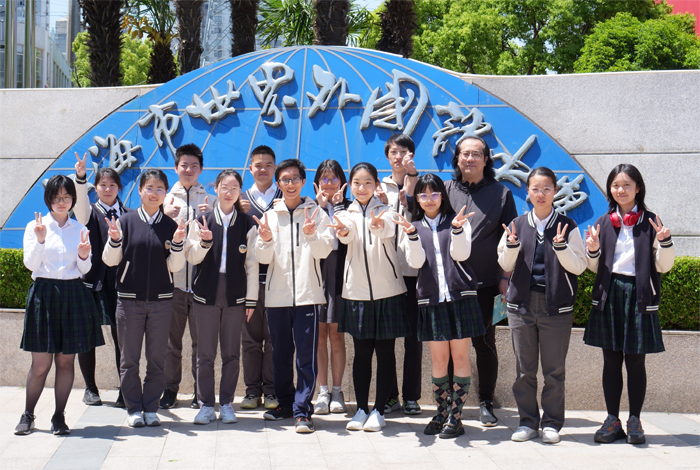
Siqi Pan delivered a speech at the Resonate and Rejuvenate Club management micro-forum titled “Thinking, Acting, Innovating – and the World Will Echo” in school.
In his speech, he outlined the three phases of the club’s development. The first phase centered on supporting individuals by accompanying people with visual impairments. The second phase expanded focus to improving the physical environment to better serve those with disabilities. The third and current phase emphasizes promoting the concept of accessibility broadly within society, advocating for inclusion and awareness at a systemic level.