Scene 6: Documentary Interview with a Visually Impaired Community Resident
More links:
The YouTube playlist for the documentary interviews
Interview Report
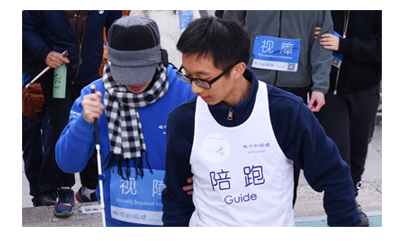
BonVista Accessibility Club had the pleasure of speaking with Grandpa Zhu, a senior resident of the Kangjian Subdistrict community. Though he lives with level-two visual impairment, his wisdom, optimism, and wit offer a powerful reminder that joy and dignity can thrive in even the most challenging of circumstances.
“I have a level-two disability. That means my vision isn’t good – sight indication is below 0.3. Things look blurry. But I can see, I can see! Just not clearly. It’s not like level-one, which is for blind people.”
Grandpa Zhu described how his limited vision affects his daily life in subtle but significant ways. Though he can move about in familiar places, he struggles to recognize people’s faces or identify objects and food.
“When I go to a meal with a whole table of dishes, I can tell there’s food, but I don’t know if it’s chicken or duck. It’s all part of life!”
Zhu still walks daily around his neighborhood, sticking to well-known paths like Cherry Blossom Avenue:
“I walk every day, always on the same route. I know where the bumps and slopes are. You can’t lock yourself in a cage. You’ve got to create your own happiness.”
Despite occasional dangers – missing a step, getting disoriented – he maintains his routines with care and confidence.
“If you don’t say hi, I won’t respond. I can see people walking toward me – but I can’t tell who’s who.”
Zhu shared how his impairment affects social interactions. He often recognizes voices rather than faces, relying on others to greet him first.
Before retiring, Grandpa Zhu worked at the East China Office of the Ministry of Light Industry – a position that involved overseeing regional light industry production. Though his professional life is behind him, his mental sharpness and humor remain undimmed.
Like many elderly people with visual impairments, Grandpa Zhu prefers to keep his phone use simple:
“Just three things: answer calls, check WeChat, and make payments. That’s it. I don’t deal with the complicated stuff.”
He admits that newer technologies can be overwhelming and prefers to focus on practical tools he already knows.
Though Zhu has applied for a white cane for the blind, he’s ambivalent about using it:
“Yes, it’s safer. But I don’t want to go tapping around like a proper, serious blind person. People look at you. If I don’t use the cane, people might think I’m fine – but then I bump into someone. Haha.”
His reflections reveal a tension between practical safety and emotional dignity – a dilemma many people with invisible or partial disabilities can relate to.
“Poor eyesight doesn’t just affect your eyes. It slows down your brain. You react slower. You can’t perceive what’s around you. It really affects a lot.”
He recalls how he once rode a scooter around the city, a sign of past independence now complicated by changes in both health and environment.
Despite the challenges, Grandpa Zhu remains deeply philosophical and resilient:
“When you’re older – disabled or not – you’ve got to find joy. Watch others. Listen to them sing. Sing a little yourself. If someone plays the Erhu or violin, join in!”
His message is simple: keep connecting, keep smiling, and don’t isolate yourself.
“Everyone has their own strengths. Don’t judge others by how they look. Everyone has their own talents.”
In just a short walk and a warm conversation, Grandpa Zhu gave us far more than a glimpse into life with vision loss. He found joy in small things, and treated others with humility and respect.